The core idea
A valid data structure and an accurate statement are different requirements. A field can contain well-formed text while describing the wrong source or date. Keep the meaning of every field documented, and prefer values derived from the same editorial record that generates the visible page.
A workable starting pattern
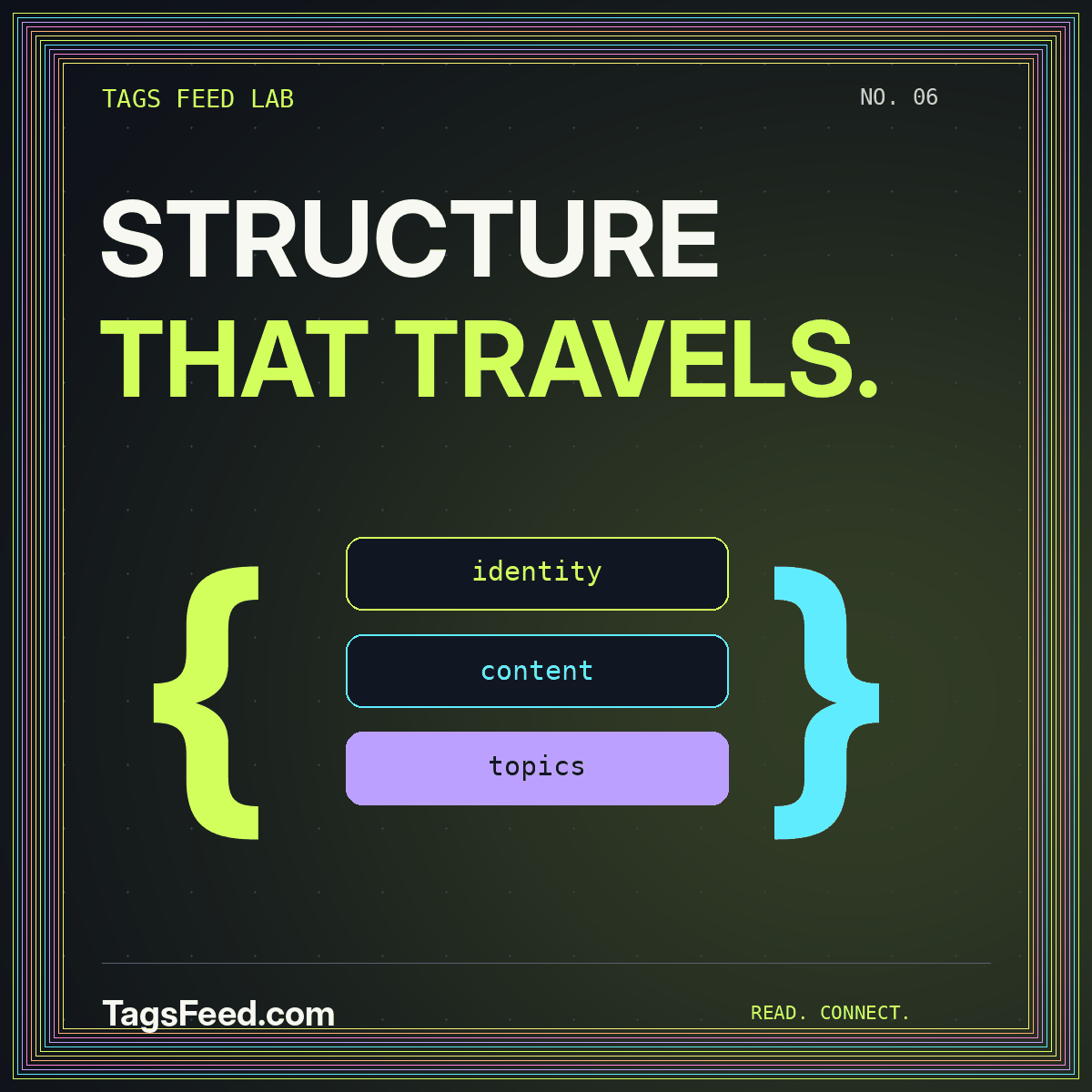
Choose a documented format for the actual consumer. A reading feed, an internal export, and page-level structured metadata serve different tasks. Validate the structure, then check identity, dates, content, and destinations separately. Leave unsupported fields absent instead of filling them with plausible inventions.
The title shown on an article page should match the title in its published metadata. An organization record should not acquire invented awards or credentials simply because a schema example contains those properties.
What this page does—and does not—offer
This is a guide to data modeling and publication. No live schema validator, API console, or visitor data processing is provided.