FOUNDATIONS
Start with a better label.
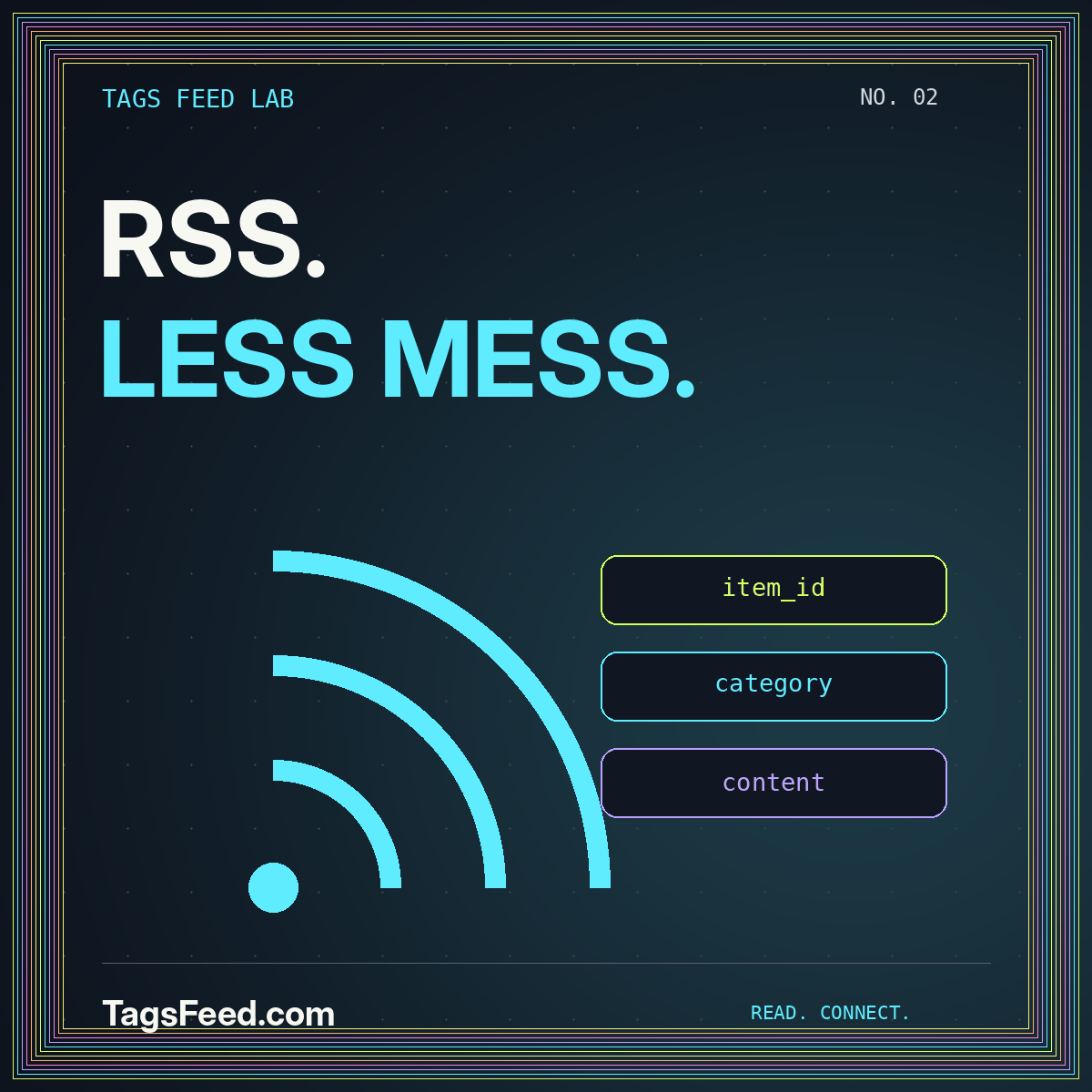
Separate topics from formats and sources. Build a vocabulary that helps readers find what they came for.
The tagging guideTags Feed | AI Tags Feed | content Tags Feed | website Tags Feed | RSS Tags Feed | article Tags Feed | topics Tags Feed | news Tags Feed | LLM Tags Feed | sentiment Tags Feed | decision model Tags Feed | ai news Tags Feed | fulltext Tags Feed | ai summary Tags Feed | openai Tags Feed | anthropic Tags Feed | gpt Tags Feed | API Tags Feed | telegram Tags Feed | structured data Tags Feed | GPS Tags Feed | Atom Tags Feed | RSS News Tags Feed | RSS Podcast Tags Feed | SEO keywords Tags Feed | domain names Tags Feed | .COM Tags Feed | .XYZ Tags Feed | Web design Tags Feed | website builder Tags Feed | prompts ai Tags Feed | ai images Tags Feed | ai image prompts Tags Feed | website classification Tags Feed | prediction market Tags Feed | sports Tags Feed | media Tags Feed | SEO Keywords Tags Feed | SERP SEO Tags Feed | custom data Tags Feed | archive data Tags Feed | URLs Tags Feed | bookmark Tags Feed | self hosted Tags Feed | iOS Tags Feed | android Tags Feed.
A FIELD GUIDE TO THE TAGGED WEB
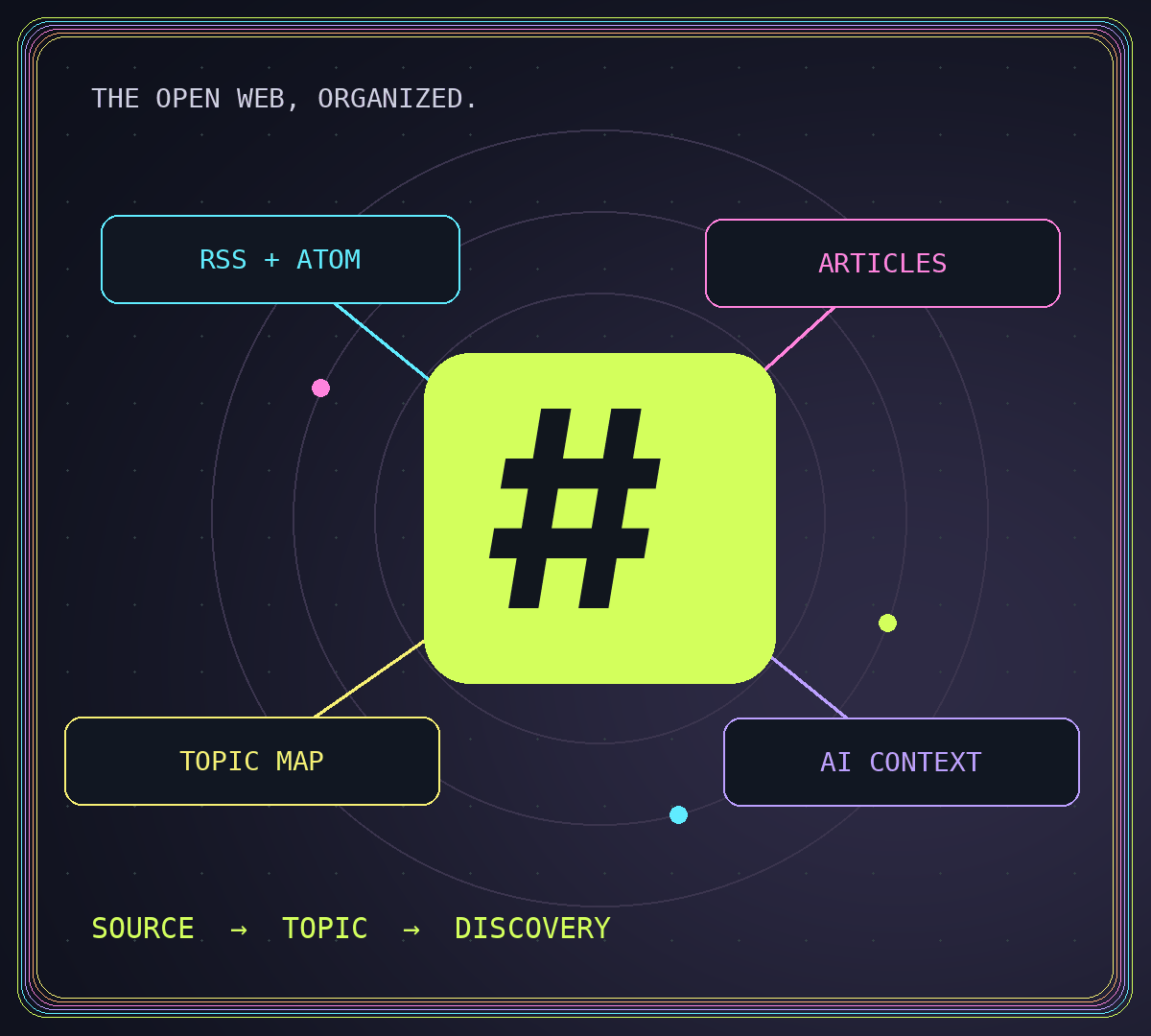
The web is full of good ideas. Give them a place to belong. Explore tagged feeds, RSS, Atom, and AI-assisted publishing—with the source always in sight.
01 / FEED FOUNDATIONS
A source, a stable identity, and a meaningful topic. Get the fundamentals right before adding another layer.
Separate topics from formats and sources. Build a vocabulary that helps readers find what they came for.
The tagging guideUnderstand RSS and Atom categories, durable identifiers, and the details that keep feeds readable.
Explore open feedsConnect article records, topic metadata, and static feed formats without pretending a file is a live API.
Find the structure02 / AI WITH CONTEXT
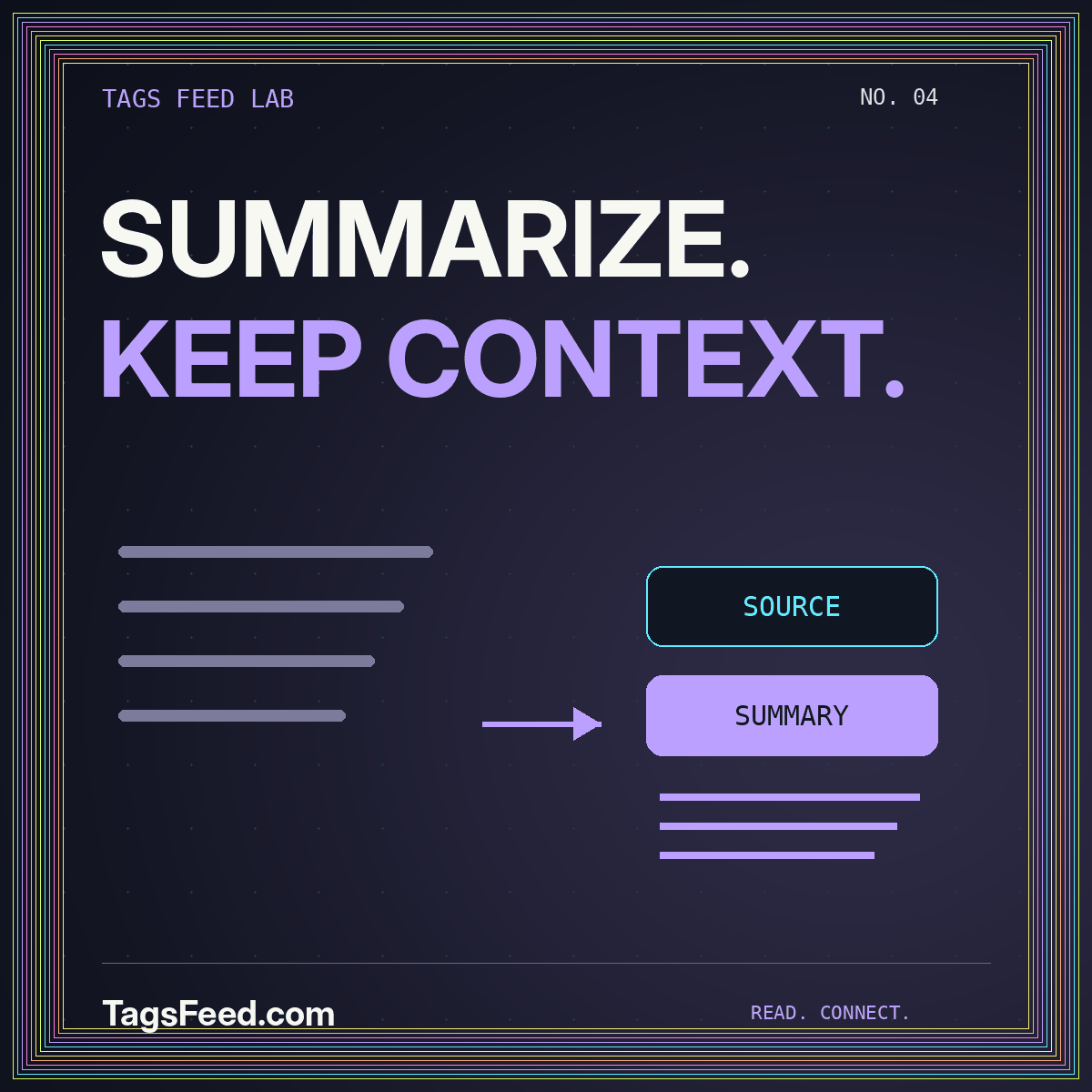
Explore summaries, LLM tagging, and sentiment as reviewable annotations—not replacements for the original source. Keep the evidence, name the uncertainty, and let editorial judgment lead.
Independent workflow guides. No live model service or official provider affiliations.
Identity, context, and the original text.
A subject, not every matching word.
Check the claims and their limits.
A clear destination and correction path.
03 / CHANNELS & MEDIA
Give reporting a source, an event context, and a useful place in the collection.
Explore the guideKeep show identity, episode topics, and media references on the right level.
Explore the guidePlan the review, attribution, and delivery rules behind a thoughtful edition.
Explore the guideConnect formats without confusing an image, a transcript, and the original work.
Explore the guide04 / TAGS FEED LAB
A practical guide to RSS categories, persistent item identifiers, portable links, full-content output, and repeatable publishing checks.
Design a reviewable AI summary workflow with bounded tasks, source evidence, structured output, evaluation, and a clear correction path.
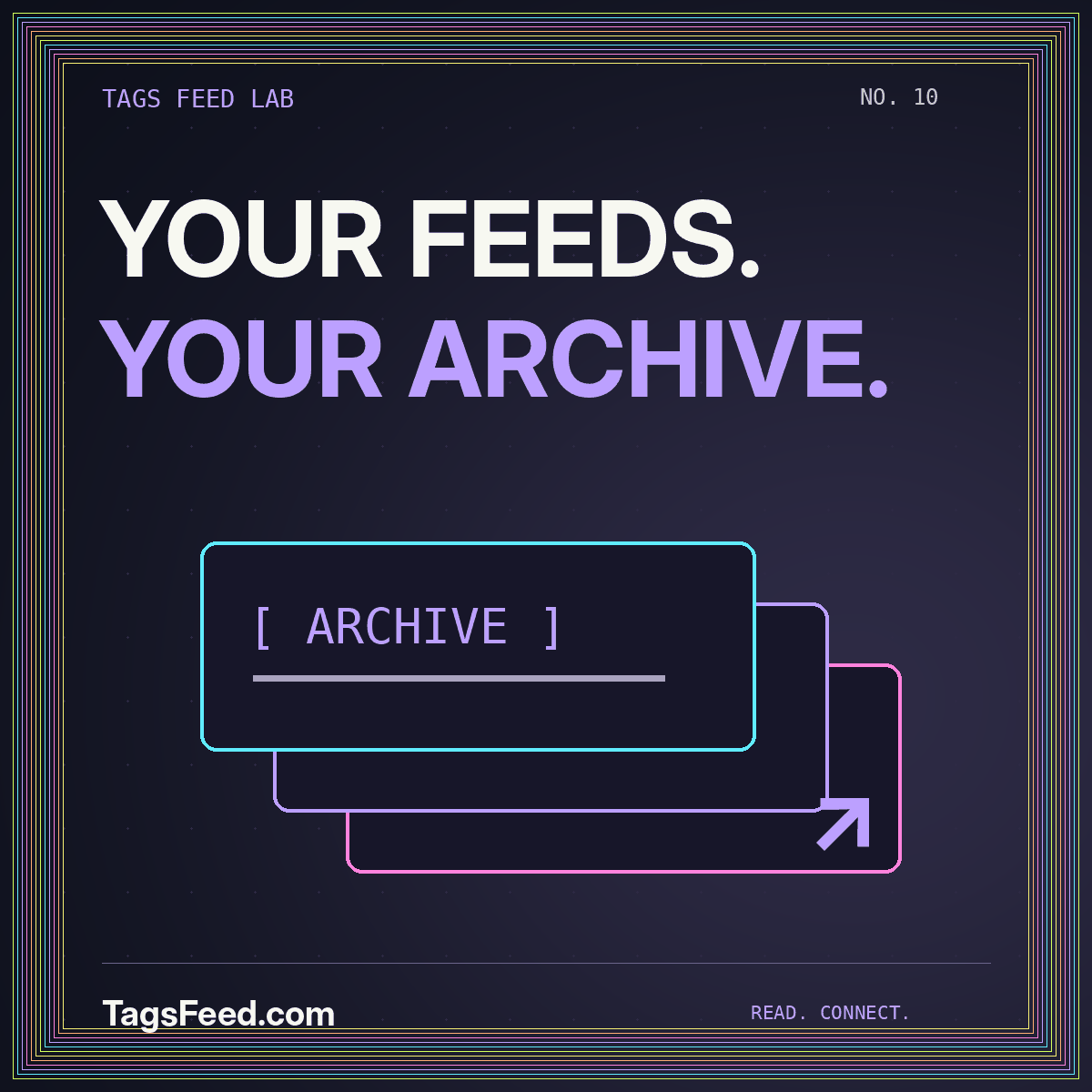
Separate a cache from an archive and plan portable records, vocabulary versions, careful retention, and tested restoration.
05 / CHOOSE YOUR READING PATH
Start with a clear record, then compare the formats that carry it.
Connect a useful vocabulary to purposeful pages and editorial review.
Create a collection you can browse, move, and recover.
06 / A FEW GOOD QUESTIONS
What this publication covers, what it does not, and where to start reading.
A collection of items connected to a consistent topic vocabulary. The useful part is the relationship between a source, an item’s identity, and the subjects it meaningfully covers. Start with the Tags Feed fundamentals.
No. TagsFeed is an independent publication of practical guides. API, AI, GPS, and platform labels identify subjects, not hosted services or official integrations.
They are two feed formats discussed in the guides. The Atom comparison focuses on how identity, categories, and dates map to a shared content record. This site publishes its own content in an RSS feed.
Yes. The site’s RSS file includes the ten complete Lab articles and the substantive topic guides. The RSS reading page gives you the feed address and explains its scope.
No. OpenAI, Anthropic, GPT, and Telegram appear as subjects of independent editorial discussion. No official partnership, live connection, or provider account is implied.
Start with the tag taxonomy guide for concepts, the RSS overview for publishing, or the complete topic directory for a reading route that fits your question.